
From now on, we will be profiling selected dog breeds at irregular intervals. This time, we're starting with three hunting dog breeds: the Dachshund, the Rhodesian Ridgeback, and the Münsterländer. What distinguishes a hunting dog? Is a hunting dog right for me? What are the unique characteristics of a Dachshund, Rhodesian Ridgeback, or Münsterländer? We shed light on these three breeds here and now in our Hunting Dog Breed Profile. You can find three more representatives, by the way, in our Breed Profile: Russell Terrier, Weimaraner, Labrador Retriever.
Hunting Dogs like Dachshunds & Co.: A Definition and Representative Hunting Dog Breeds
Who hasn't seen it? The hunter in the forest, and next to him his loyal dog, often a Dachshund. Hunting dogs are all breeds that assist humans in hunting. This was important in the past but is becoming less and less so today. And one thing upfront: such a dog won't help with bargain hunting. Hunting dogs can be used for retrieving, actual chasing, or flushing out prey. The well-known keen nose of hunting dogs is immensely helpful to hunters in tracking down wild animals that, for example, have had an accident.
Anyone who acquires a typical hunting dog like a Dachshund today will hardly use it for hunting in a private setting. Please be aware, therefore, that it can mean a lot of work to get your dog's hunting instinct under controlled management. And think carefully about whether a hunting dog is well-suited for an apartment.
The Dachshund: The Demanding "Carpet Porsche"
The Dachshund is also known as a Teckel or Dachshund. The three typical representatives come with wirehair, longhair, or shorthair, and in various coat colors. Caution: Be wary of "Tiger Dachshunds," named for their coat color. This coloration is due to a genetic defect – incorrect breeding can lead to serious illnesses, for example, especially colorations in "blue" and "Isabella" are susceptible to a variety of diseases that only appear later in the dog's life. Better to stay away! The same applies to so-called Teacup dogs, i.e., extra small breeds.
Depending on chest circumference, Dachshunds are categorized as Rabbit Dachshunds (less than 30 cm), Miniature Dachshunds (30–35 cm), or Standard Dachshunds (more than 35 cm). The muscular body and elongated shape are predestined for hunting, especially in the den of a fox or badger, a Dachshund can get in wonderfully. Nowadays, it is still highly valued as a hunting dog, but in most cases, it is kept more as a companion dog or in a private setting as a family dog. The Dachshund is an intelligent and cheerful dog. If you meet its needs, you will receive in return a loyal and courageous companion for life.
If you decide on a Dachshund as a pet, you should consider a few things, as with many hunting dog breeds:
- Dachshunds are not lapdogs, but lively and spirited, but still make sure he doesn't become overweight, no matter what kind of "Dachshund eyes" he tries on you.
- Dachshunds demand your attention and extensive walks.
- A Dachshund is extremely courageous and will confront larger dogs if they cross its path.
- Dachshunds are not suitable for first-time dog owners, but require owners with a lot of dog experience who master leadership.
- The Dachshund's physique is not designed for dog agility or similar sports with greater strain; climbing stairs and jumping are also absolutely not for Dachshunds.
This equipment you should get for your Dachshund:
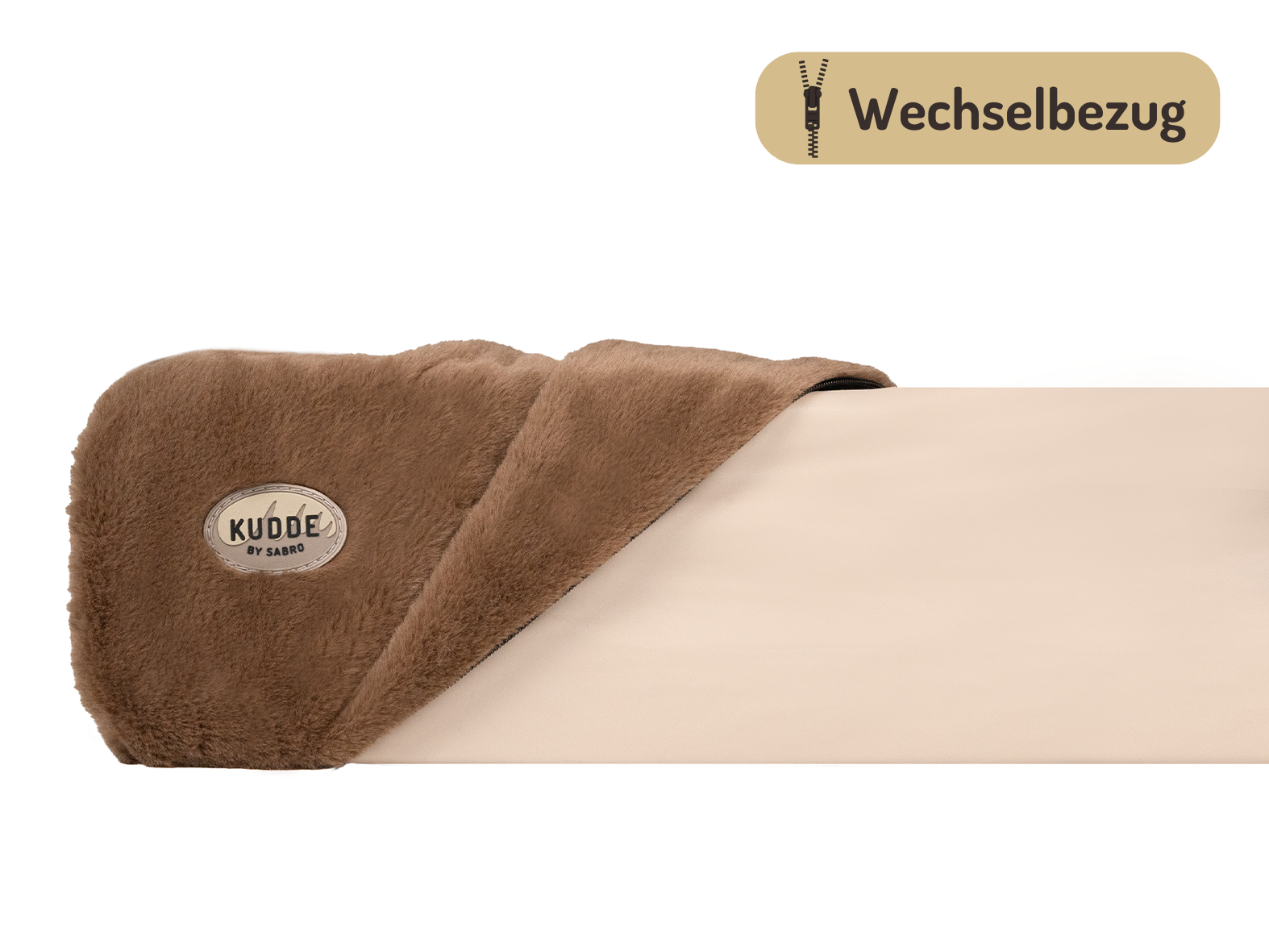
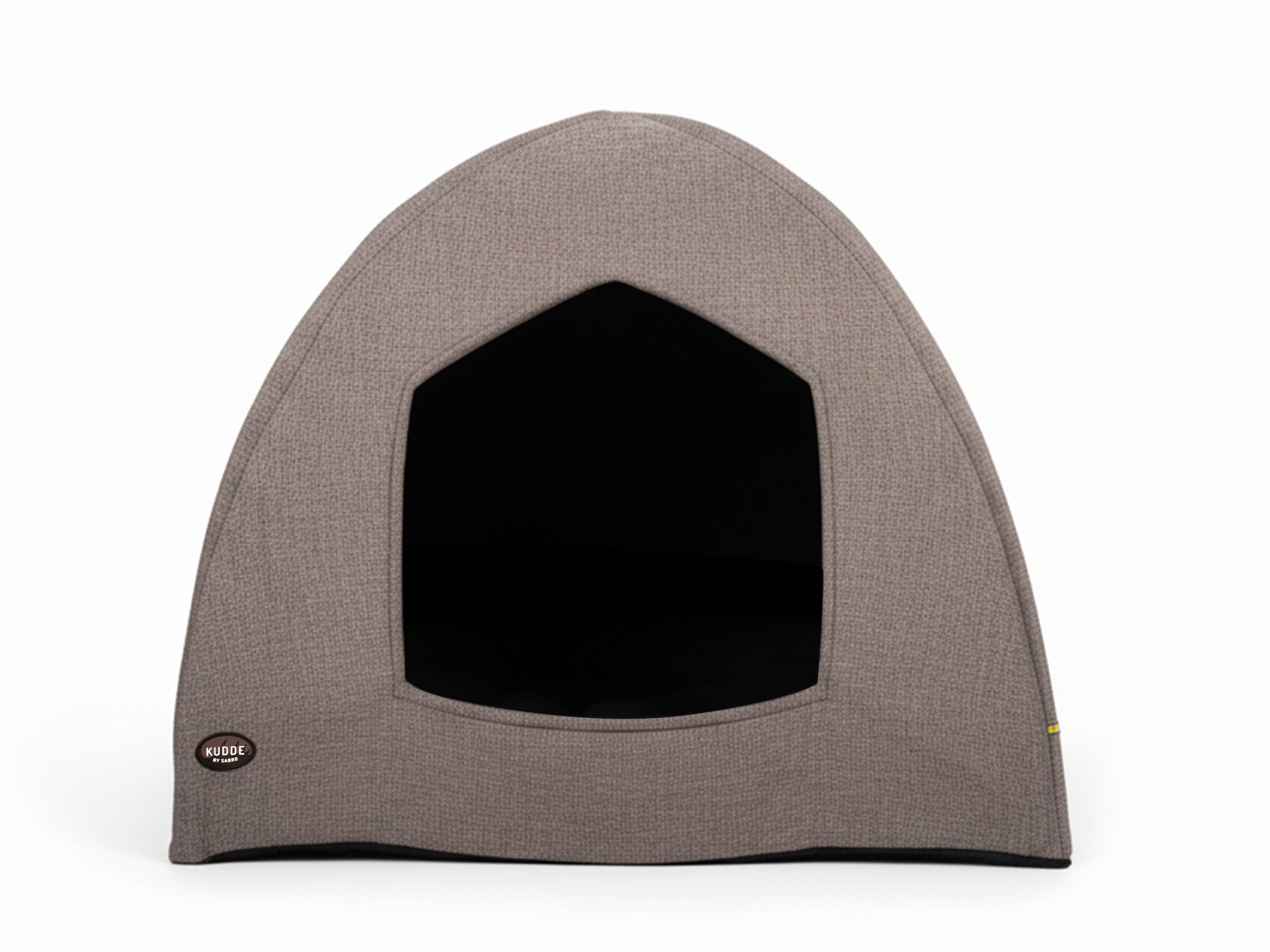
- Very important is a dog bed that takes into account the anatomical shape of the Dachshund. Due to their long spine in relation to their short legs, Dachshunds are prone to Dachshund paralysis, a form of disc herniation. When buying a dog bed, make sure it is designed to meet your Dachshund's needs. Our KUDDE dog bed allows for full extension and relief of the spine and, in the Special version, is already equipped with memory foam, which ensures that your dog can sleep with pressure relief and orthopedic support.
- A good dog brush and a tick remover are advisable, as Dachshunds, due to their build, tend to move through undergrowth.
- For long-haired and wire-haired Dachshunds, a stripping comb is also recommended.
- Always good: toys for engagement and play-hunting.
The Rhodesian Ridgeback: Spirited and Responsive
The Rhodesian Ridgeback (RR) originally comes from Southern Africa (Rhodesia, now Zimbabwe) and the name is program: Ridgeback here means something like "fur strip back" (geographically more like "ridge"), more precisely, a stripe of fur (hair ridge) runs against the direction of growth. It is readily used worldwide for hunting wild game, in its home country also for lion hunting, hence the name lion dog, which is somewhat misleading: the Ridgeback usually only distracted the lion in a pack, but did not kill it. In our latitudes today, it is better known as a good and family-friendly guard dog and is not recognized as a hunting dog.
The typical wither height of the Rhodesian Ridgeback is around 61 to 66 cm for females and 63 to 69 cm for males. Rhodesian Ridgebacks have a puppy character for longer than many other dogs: they usually only reach full maturity, physically and psychologically, after two, sometimes even three years. So it can easily happen that the dog surprises you with unexpected behavior in a situation that is actually familiar. Therefore, it needs a lot of guidance from its human. If, after careful consideration, you decide on a Ridgeback, consider whether it absolutely has to be a puppy or whether an adult Rhodesian Ridgeback would also be an option. The association "Rhodesian Ridgeback in Not" from Dülmen has been doing good work in this area of rehoming for more than 20 years.
If you are interested in a Rhodesian Ridgeback as a pet, here is some more important information about this type of hunting dog:
- Ridgebacks are extremely active, but be careful: in rain and bad weather, you generally won't get them out the door. Due to the lack of undercoat, the Ridgeback doesn't like wetness from above, but of course, the exceptions confirm the rule.
- Anyone who moves a lot also needs to eat properly, so be prepared for a higher food requirement.
- Generally, the Ridgeback is a loyal family dog. Nevertheless, it must, and this actually applies to all breeds, learn the correct interaction with children. It is at least as important to teach children respectful and loving interaction with the dog, because even a Ridgeback does not like to be annoyed and needs its undisturbed rest periods.
- Like many hunting dogs, the Ridgeback is not suitable for inexperienced dog owners, as it needs a lot of companionship and patience from you on its journey.
- Many Rhodesian Ridgebacks are very strong-willed and like to assert their will, but are very reliable and loyal.
- Ridgebacks have quick reactions and respond to impulses such as smells or sounds even at a distance.
- This courageous dog breed enjoys protecting its territory and is accordingly confrontational towards strangers and other animals.
- Around 3% of all Rhodesian Ridgebacks suffer from Dermoid Sinus, a congenital condition affecting the spine and head area: this involves the formation of a strand of hair and sebum that can become inflamed and then permanently damage the spinal cord; surgery is strongly recommended upon detection.
This equipment you should get for your Rhodesian Ridgeback:
- The very short-haired dog is relatively easy to care for and only needs to be brushed occasionally.
- A good supportive dog bed is definitely part of the right equipment for this breed, even if he also loves sharing the couch at home with you.
- Many Ridgebacks don't like rain and get cold very quickly in low temperatures due to their lack of undercoat. With a well-fitting dog coat, you ensure that your dog will happily leave the house with you even in unpleasant weather.
- Ridgebacks also need a lot of activity and get bored quickly. Therefore, we recommend a suitable range of toys for this breed as well.
The Münsterländer: Sporty-Elegant and Actively Hunting
Even today, the Münsterländer is primarily bred to be used as a hunting dog. It belongs to the pointing breeds, just like the German-, Long-, Short-, Wire-, and Stichelhaar, Pudelpointer, Weimaraner, Griffon, Magyar Vizsla, and Epagneul Breton.
There are the Large and Small Münsterländer, which have different ancestors, even if the name doesn't suggest it, but both are elegant, sporty dogs. The coat is dense, maximally medium-long, wavy, and water-repellent. Here, "Form follows Function" still applies – as would be desirable for every breed – a healthy, normal physique without extremes. The average wither height of a Münsterländer is around 53 cm for the Small Münsterländer and around 60 cm for the Large Münsterländer.
Pointing dogs love to sniff, search, and retrieve, as these are the important basic characteristics for hunting training. They are also very fond of water and enjoy retrieving from it. If you will not use your Münsterländer for hunting, it needs comparable activity, for example through agility, mantrailing, or other dog sports. Only then will this intelligent and active dog be happy and content with you.
Before deciding on a Münsterländer, you should consider a few things that apply to many representatives of the hunting dog breed profile:
As a hunting dog, a Münsterländer needs a lot of exercise, not on city streets, but rather on natural forest paths – in all weathers.
- The Münsterländer is family-friendly, but not necessarily a cozy family dog; it wants to work – with its nose and its brains; dog sports are a must for it.
- Small pets, such as rabbits and the like, are primarily interesting prey for a hunting dog and therefore should not necessarily live in the household.
- Münsterländer are extremely fond of water, so be prepared for wet floors and drying work, and warn the ducks in your area.
- The Münsterländer is also not a dog for beginners; it needs consistent training and leadership.
- An apartment and city life do not go well with a Münsterländer; its energy demands at least regular excursions into nature and ideally a life in the countryside.
The following accessories are recommended for the Münsterländer:
- A dog brush for regular brushing of the medium-length coat is indispensable to maintain its health.
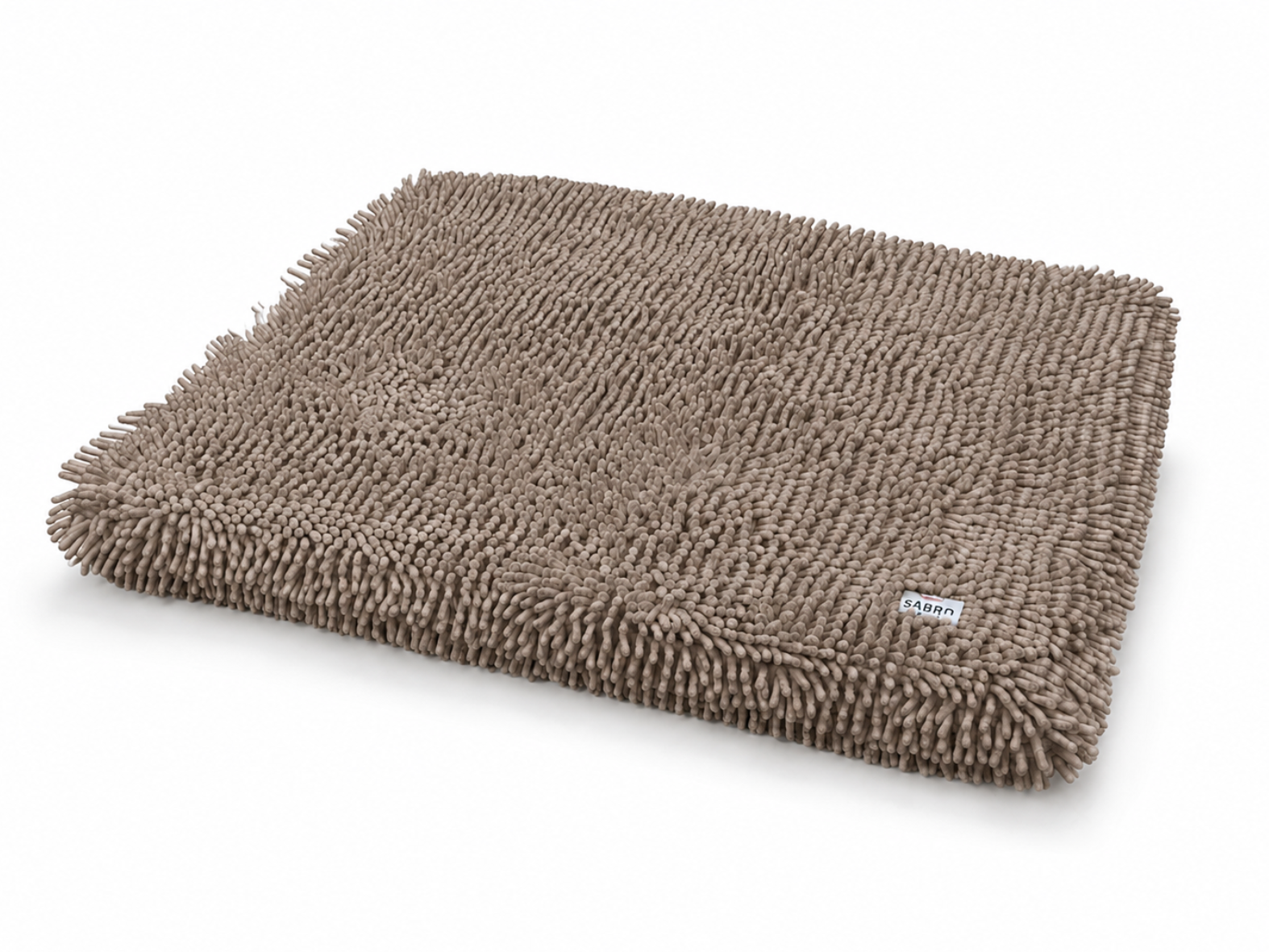
- Its good health and athleticism are also supported by a good dog bed. Since it enjoys being outdoors in all weathers (also happily in the water), an easy-care and wipeable dog bed like the KUDDE is optimal. Through pressure-relieving lying, it also prevents joint problems.
- A sturdy dog leash like our OUTDOOR dog leash with practical adjustment options is recommended for the Münsterländer, because this material is robust and does not harden even when wet.
- Toys that are good for retrieving are also a good idea.
What experiences have you had with a Dachshund, Rhodesian Ridgeback, or Münsterländer, or another hunting dog? Do you have tips for other dog owners? Let us know in the comments.